By Dr Shaheda Omar
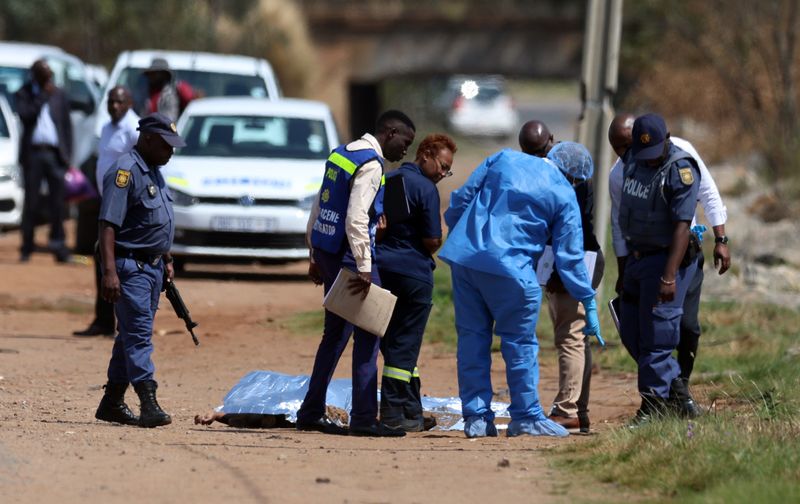
Seven women have been found murdered.
Read that again.
Not seven statistics. Not seven case numbers. Not seven headlines to be consumed between breakfast and the next crisis.
Seven women. Seven lives. Seven families devastated. Seven communities forced to confront the terrifying possibility that a woman can disappear, be brutalised and ultimately murdered while the machinery of protection fails to reach her in time.
At the Teddy Bear Foundation for Abused Children, we are distressed. We are disturbed. But increasingly, we are also asking a more difficult question:
When does outrage become action?
South Africa has become disturbingly familiar with the ritual. A woman is murdered. The nation expresses shock. Politicians condemn the violence. Communities march. Organisations issue statements. Promises are made.
And then another woman dies.
And another.
Until the next body is found.
This cannot be our national rhythm.
The President’s declaration of a state of emergency around gender-based violence must mean something beyond words. If we are genuinely in a state of emergency, then the response must look, feel and operate like an emergency.
Emergencies demand extraordinary mobilisation.
They demand resources. Personnel. Coordination. Intelligence. Rapid response. Accountability. They demand that institutions stop working in isolation and start working together around the person whose life is at risk.
Women cannot be protected by declarations.
They are protected by functioning systems.
We need police who respond when women report threats. We need investigators who recognise escalating risk. We need prosecutors who understand the devastating dynamics of gender-based violence. We need social workers who are available where they are needed. We need shelters that have capacity. We need healthcare services that respond to trauma. We need courts that do not allow justice to become an interminable waiting game.
And we need government departments to stop passing vulnerable people from one institutional door to another.
Because somewhere between the first threat and the final act of violence, there is usually an opportunity to intervene.
The question is whether we recognise that opportunity—and whether we have the systems to act on it.
The woman behind the statistic
We must resist the numbing effect of numbers.
The seventh woman had a name.
She had a history.
Someone loved her.
Someone worried about her.
Someone expected her to come home.
Perhaps a child waited for her.
And if she was a mother, her murder did not end with her death.
It entered the life of every child who depended on her.
This is the dimension of gender-based violence that is too often missing from our national conversation.
When we kill a woman, we do not kill only a woman. We can fracture an entire family system.
Children may lose their primary caregiver, their economic security, their home and their sense of safety—all at once.
A child who witnesses violence, discovers that a mother has been murdered or grows up in the aftermath of domestic violence does not simply “get over it”.
Trauma has consequences.
It can affect behaviour, emotional regulation, relationships, schooling and a child’s understanding of safety and trust.
And some children carry that trauma into adulthood.
That is why gender-based violence is also a child protection crisis.
At the Teddy Bear Foundation, we know this because we encounter the consequences on the frontline.
We see children who are frightened.
Children who are angry.
Children who cannot find the words for what they have experienced.
Children who have learnt that violence is how adults resolve conflict.
And this is why our organisation has deliberately broadened our work to include the boy child.
We cannot leave boys out of the solution
For too long, the conversation about violence against women has sometimes positioned boys and men only as potential perpetrators.
That is insufficient.
If we want to dismantle the architecture of violence, we must reach boys before violence becomes embedded in their understanding of masculinity.
We need to teach boys that strength is not domination.
That masculinity is not entitlement.
That love is not ownership.
That jealousy is not proof of affection.
That consent matters.
That boundaries matter.
That empathy is strength—not weakness.
And critically, we must recognise that some boys are themselves victims of violence and sexual abuse.
A boy who is sexually victimised may remain silent because he fears ridicule, disbelief or being told to “be a man”. His suffering can remain invisible because society is often more comfortable seeing boys as strong than seeing them as vulnerable children who need protection.
We cannot ask boys to become champions against violence while denying them the opportunity to heal from violence themselves.
When boys receive appropriate support, empathy and intervention, we give them an opportunity to understand empathy and develop healthier ways of relating to others.
That is prevention.
That is breaking the cycle.
But prevention does not absolve the state from its responsibility to protect women who are already at risk.
Emergency means emergency
If the country has declared an emergency, then extraordinary measures must follow.
We need to identify women and children at highest risk and ensure that their cases receive urgent, coordinated attention.
We need stronger mechanisms for information-sharing between police, social development, health, education, prosecutors and community-based organisations.
We need adequately funded frontline services.
We need rapid responses to reports of violence.
We need meaningful protection for survivors who take the courageous step of reporting.
We need perpetrators investigated and prosecuted.
And we need to stop measuring success by how many statements are issued after a murder.
Measure success by how many murders are prevented.
That is the metric that matters.
The woman who gets home safely matters.
The child who does not lose her mother matters.
The survivor who escapes an abusive relationship matters.
The boy who learns that violence is not masculinity matters.
The perpetrator who is stopped before violence escalates matters.
That is what a genuine emergency response looks like.
We are running out of excuses
South Africa has some of the strongest policies and legislative frameworks intended to protect women and children.
But laws on paper do not protect a woman walking home.
A policy document does not answer a desperate telephone call.
A strategy does not rescue a child.
A declaration does not stop a perpetrator.
People do. Systems do. Resources do. Accountability does.
And when those things fail, people die.
This is the uncomfortable truth we must confront.
We cannot continue to mourn women after they are dead when we could have done more while they were alive.
We cannot continue to ask survivors to be brave while the systems they approach are under-resourced.
We cannot continue to tell communities to report abuse without ensuring that reporting leads to meaningful intervention.
And we cannot continue to teach girls how to avoid violence while failing to teach boys—and society at large—why violence against women is unacceptable.
The responsibility for ending gender-based violence cannot sit on the shoulders of women.
Women did not create this violence. Women cannot be expected to solve it alone.
No eighth woman
Seven women have been found murdered.
We should not be waiting to write about the eighth.
We should be doing everything within our power to ensure that there is no eighth woman.
This is the moment for government to move beyond declarations and demonstrate what an emergency response actually means.
Call in the resources.
Mobilise the expertise.
Strengthen the frontline.
Protect the vulnerable.
Find those at risk.
Intervene early.
Prosecute effectively.
Support survivors.
Protect children.
Educate boys.
Challenge violent masculinity.
And hold institutions accountable when they fail.
Because the question facing South Africa is no longer whether gender-based violence is an emergency.
The question is whether we are prepared to behave as though it is.
At the Teddy Bear Foundation, we refuse to accept a future in which children grow up learning that the murder of women is simply another recurring national tragedy.
We want boys who understand that protecting women does not mean controlling them.
We want girls who grow up knowing that safety is their right, not a privilege.
We want families that are supported before violence becomes fatal.
We want institutions that intervene before a body is found.
And we want a country in which the value of a woman’s life is demonstrated before, not after, she is murdered.
Seven women are dead.
South Africa, do not wait for number eight.
Act as though her life depends on it—because it does.
(Image credit: Daily Maverick)