The tragic incident in Ceres, where a 14-year-old allegedly raped and killed a 6-year-old child, has understandably shocked communities across South Africa. While the circumstances of this case will be determined through the justice process, it raises important questions about child-on-child sexual abuse, the factors that contribute to such behaviour, and how the law and social services respond to both the victim and the child alleged to have offended.
Having worked with children who have displayed harmful sexual behaviour for nearly four decades, I believe it is important that we respond with both compassion for victims and accountability for children who cause harm. These two priorities are not mutually exclusive.
Child-on-child sexual abuse is more common than many realise
One of the greatest misconceptions is that sexual abuse is committed only by adults. Research internationally and in South Africa indicates that a significant proportion of sexual abuse involving children is committed by another child or adolescent.
Children who display harmful sexual behaviour are not a homogenous group. Their behaviours range from inappropriate sexualised behaviour arising from curiosity and poor boundaries to serious sexual offences involving coercion, violence and significant age or developmental differences. Every incident requires careful assessment.
Why does this happen?
There is no single explanation. Rather, harmful sexual behaviour usually develops through multiple interacting risk factors, including:
Exposure to sexual abuse or other forms of violence.
Access to pornography and sexually explicit online material at an early age.
Domestic violence within the home.
Poor supervision and inadequate parental monitoring.
Emotional neglect and disrupted attachment.
Exposure to criminal or violent environments.
Untreated mental health difficulties or developmental vulnerabilities.
Peer pressure and distorted beliefs about sex, consent and power.
Importantly, many children who experience abuse never go on to abuse others. Likewise, not every child displaying harmful sexual behaviour has been sexually abused. Each child must therefore be individually assessed rather than assumptions being made.
The impact on the victim
The immediate priority must always be the safety and wellbeing of the victim.
A child who has experienced sexual abuse requires:
Immediate medical assessment where indicated.
Trauma-informed forensic interviewing.
Psychological support.
Ongoing therapeutic intervention.
Protection from further harm.
Support for the family throughout the legal process.
When the victim is as young as six years old, the trauma extends beyond the immediate family and often affects the entire community.
Responding to the child who caused the harm
It is understandable that communities react with anger when a child commits a serious sexual offence. However, society also has a responsibility to determine why this behaviour occurred and whether further harm can be prevented.
Children are still developing neurologically, emotionally and socially. This does not excuse criminal behaviour, but it does mean they have a greater capacity for rehabilitation than adults if appropriate intervention occurs early.
Assessment should include:
Comprehensive psychological evaluation.
Risk assessment.
Family assessment.
Developmental assessment.
Assessment of trauma history.
Educational functioning.
Mental health screening.
Intervention should be tailored according to the child’s level of risk and needs.
How does South African law respond?
South Africa has one of the most progressive child justice systems in the world.
When a child under the age of 18 is alleged to have committed an offence, the response is guided primarily by the Child Justice Act together with relevant provisions of the Children’s Act and the Criminal Law (Sexual Offences and Related Matters) Amendment Act.
The Child Justice Act recognises that:
Children must be held accountable for criminal behaviour.
Accountability should be developmentally appropriate.
Rehabilitation should be prioritised wherever possible.
Detention should be a measure of last resort.
Diversion may be appropriate in some cases, depending on the seriousness of the offence and other legal considerations.
In extremely serious offences such as rape or murder, prosecution through the courts is likely, although the child’s age, criminal capacity and individual circumstances remain important legal considerations.
The role of Social Development
Social Development plays a critical role before, during and after court proceedings.
Social workers undertake:
Assessment of the child.
Family investigations.
Recommendations to the court.
Diversion assessments where applicable.
Therapeutic referrals.
Family strengthening services.
Reintegration planning.
Unfortunately, many social workers carry overwhelming caseloads, limiting their ability to provide the intensive long-term intervention that these children require.
The role of child protection practitioners
Practitioners working with children displaying harmful sexual behaviour should adopt a structured, evidence-informed approach that includes:
Immediate safeguarding.
Comprehensive multidisciplinary assessment.
Safety planning.
Individual therapeutic intervention.
Family therapy.
School-based support.
Ongoing risk monitoring.
Reintegration planning where appropriate.
The objective is always twofold:
Protect potential victims.
Reduce the likelihood of future offending.
Prevention remains our strongest intervention
Cases such as this remind us that intervention often comes far too late.
Prevention should begin long before harmful behaviour emerges through:
Teaching children about body safety and consent.
Helping parents supervise children’s online activity.
Early identification of problematic sexual behaviours.
Accessible mental health services.
Positive parenting programmes.
School-based prevention education.
Community awareness initiatives.
Early referral when concerns first arise.
A balanced public response
The pain experienced by the victim’s family can never be understated. Their loss deserves compassion, justice and ongoing support.
At the same time, if we fail to understand and treat the factors that lead some children to sexually harm others, we risk creating more victims in the future.
A child who causes serious harm must be held accountable, but accountability and rehabilitation can exist together. Effective child protection requires both.
Ultimately, our goal must be to protect children from becoming victims and to intervene early enough so that vulnerable children do not become perpetrators.
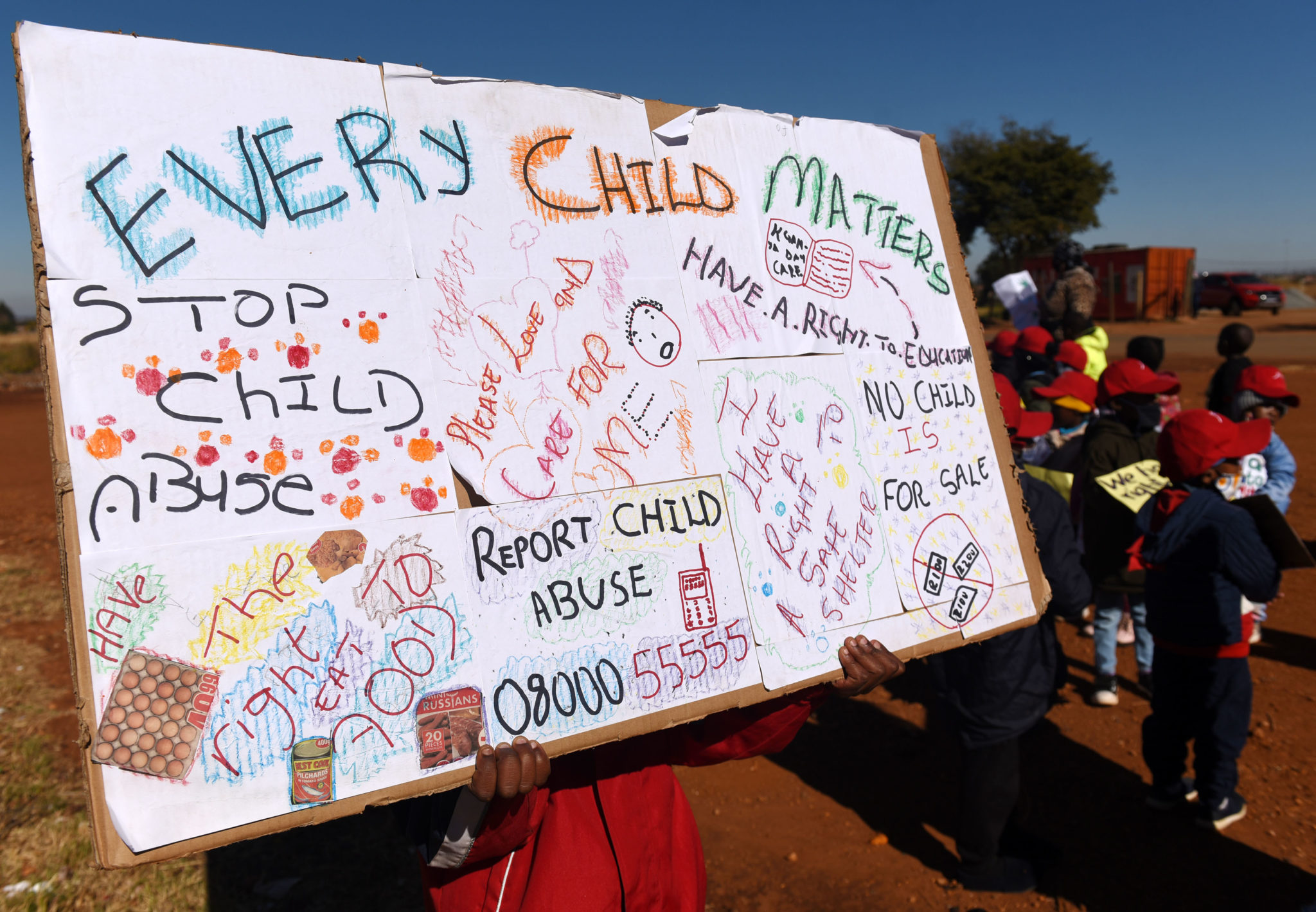
(Photo: Pre School and Early Child Development children from Orange Farm, South of Johannesburg. Credit: Nigel Sibanda, The Citizen)